Three ways to put AI to work.
Not an automation shop. Bespoke, production-grade machine learning — the kind that ships into clinical, legal, and revenue systems, clears regulatory review, and survives contact with real data.
Strategy & roadmap
Where does AI actually move your numbers — and where would it just burn budget? A candid, board-ready assessment: feasibility, risk, ROI, and a sequenced roadmap your leadership can act on.
Production ML systems
Models that run where your team works — not in a notebook. Interpretable, monitored, and engineered to withstand compliance review, audit, and scale.
LLMs, RAG & generative AI
Retrieval over your documents, assistants your clients can trust, and agentic workflows wired into your stack — grounded, cited, and access-controlled. Plus photoreal generative image pipelines for product and visualization.
A disciplined path from question to production.
Every engagement is structured to de-risk AI for your organization — fixed scope, weekly visibility, and a production system your team owns outright at the end.
Discovery & assessment
I map how your organization actually runs — under NDA from the first conversation, if needed — and pinpoint where AI earns its keep. You leave with clarity, even if we're not a fit.
Architecture & plan
A blueprint in plain English: what gets built, what it costs, when it ships. Fixed scope, fixed price — you approve before a line of code is written.
Build & integrate
I build the system and wire it into the tools your team already uses — case management, CRM, dashboards, whatever runs your day. Working software and a written status update, every week.
Launch & support
I ship it, watch the metrics, and stay on for 60 days at no cost while your team gets comfortable owning it.
Real systems. Real numbers.
From Fortune 500 pharma to high-growth SaaS — every engagement below shipped to production and moved a number that mattered to the business.
Patient-finding at global scale
Rare-disease and therapy-switch models over billions of patient records — extreme class imbalance, clinical and regulatory review, deployed across global markets.
Fraud detection on transaction graphs
Led 3 data scientists building graph neural networks over terabytes of transaction data — fraudulent loans, money laundering, and human-trafficking entity detection.
Real-time DNS threat detection
Built scalable streaming pipelines (Kafka, Flink, K8s) and re-architected serving to cut latency and cost on a big-data platform.
A showroom for 100M combinations
Diffusion models fused with programmatic compositing (SAM2, OpenCV) compress 107M+ product combinations into ~1,100 API calls. Led 2 engineers from concept to production in 2 months.
Natural-language property search
An AI avatar with LLM + RAG over a luxury firm's listings and Azure text-to-speech — buyers describe what they want and get instant, grounded matches.
Sub-second RAG over Canadian law
A retrieval-augmented engine over Canadian legal codes — vector DB, LangChain, open LLMs — architected for answers in under a second.
Unblocking a stuck CV team
Came in as a consultant on detection and segmentation and cleared a four-month engineering blocker — clearing the path to acquisition.
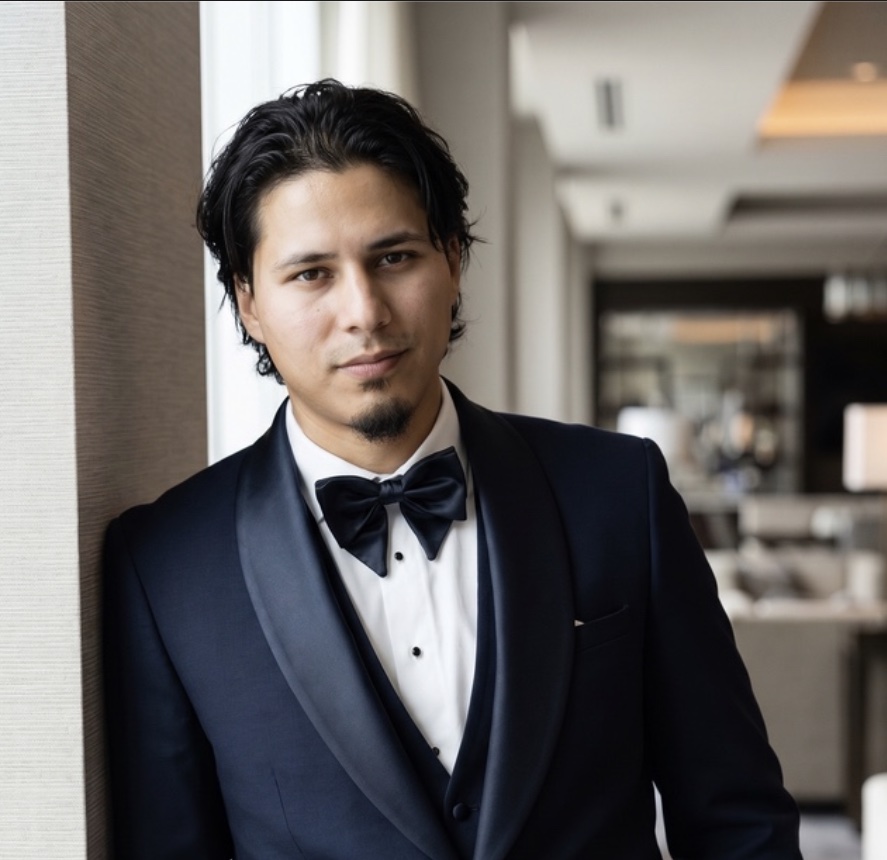
A principal who builds — not an agency that delegates.
Seven years shipping machine learning across pharma, banking, and infrastructure — Sanofi, Scotiabank, TD, RBC, and BlueCat — spanning clinical ML over billions of patient records, graph-based fraud detection, real-time streaming pipelines, and generative AI.
I founded AndalusAI in 2024 to deliver fine-tuned LLMs, RAG, and agentic systems into healthcare, legal, and real-estate production — backed by graduate studies in AI at Stanford, a peer-reviewed publication, and six courses taught at U of T.
When you engage AndalusAI, you work directly with the principal who designs and builds the system — start to finish, with the discretion regulated work demands.
Toronto, Canada
Let's find where AI actually pays off.
One confidential discovery call. An honest answer — even if it's "you don't need ML for this."
Book a confidential call Tahir@andalusai.ca